
Letter From The Editor: Disintegration Issue
SCIENTIFIC TIDBITS
Welcome to Scientific Tidbits, an editorial curated by Dr. Aarti Kuver connecting neuroscience, biochemistry, and molecular cellular biology with the principles of Ayurvedic theories. Explore accessible, science-backed insights on the gut-brain axis, wellness biomarkers, nutrition, seasonal health, and human behavior.
In this article, the Editor in Chief of The Magazine shares a letter for the newest issue. The concept stemmed from her observations of people standing in line for idiotic things instead of doing something useful with their time. But, not one to lecture, much, she decided to take a more constructive route.
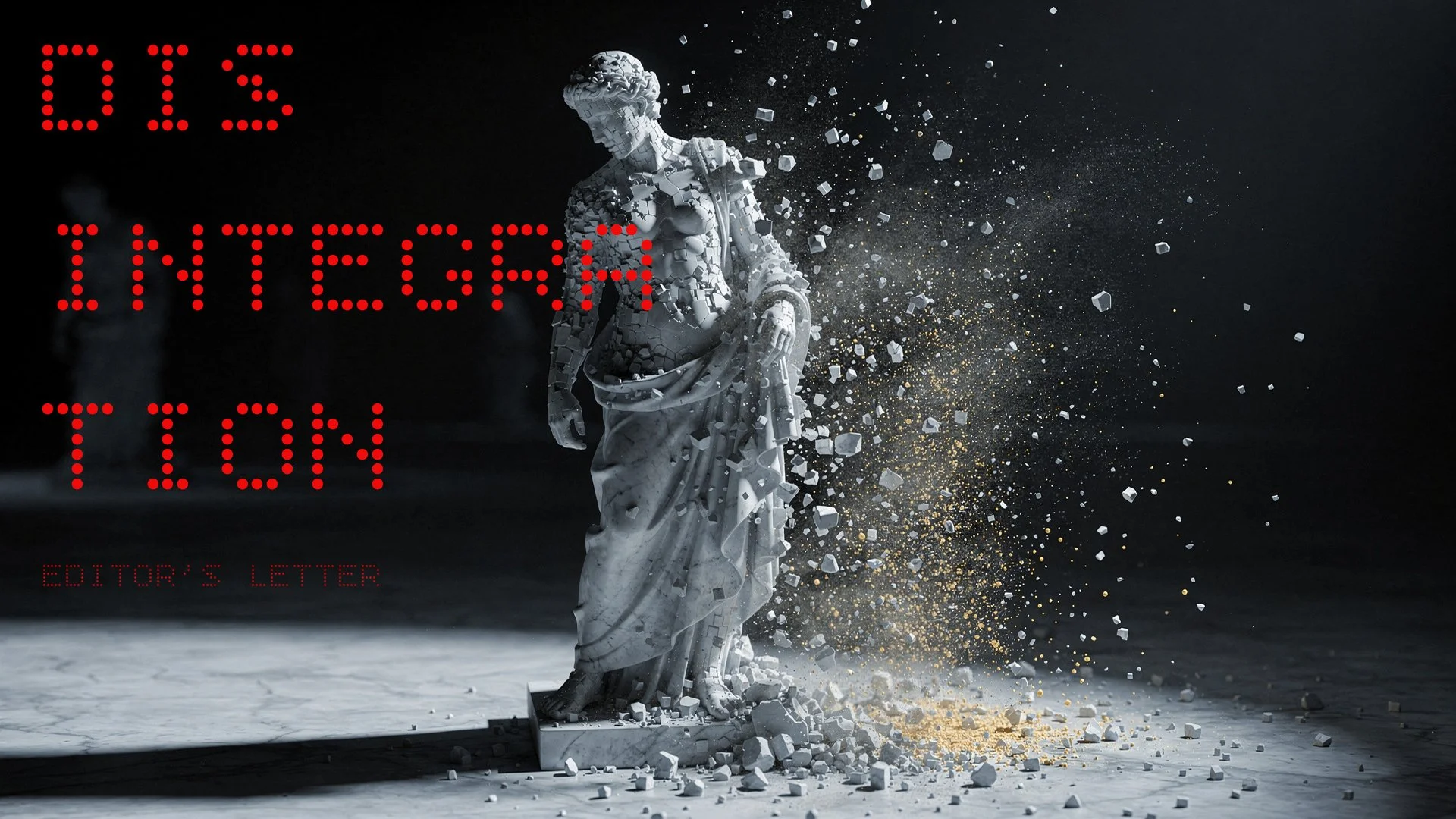
This image was created by AI.
Dear Readers,
What is disintegration?
It is a process. And, it usually happens slowly without much notice. It is active, though.
Pieces of a whole result. Or, a whole is left without pieces.
Disintegration is usually reserved for negative connotations when referring to human function or social interaction. The whole works better than the parts on their own. What would be the exception?
We may need to disintegrate a little to regenerate the whole. Or disintegrate the components that are not useful or counter desperately sought-after revitalization. We can’t just have clumps of lingering dead mitochondria blocking anti-aging activities.
Physicists disintegrate matter to isolate its smallest active bit. Marie Curie got two Nobel Prizes for it. Remarkably, those identified extracts are often used to repair, supplement, and improve. Sometimes, the element just works better on its own. For example, extracting turmeric’s key active component curcumin. The process fills an absence or neutralizes neglect.
This Fall-Winter Issue turns disintegration into a constructive asset.
Your personal energy profile, or doshic constitution, is based on ratios of several components. To attain homeostasis, decreasing impractical elements through partial loss is an ongoing subtle process.
Fashionable Science identifies the energetic quality or principle that needs a nudge, recognizing it in a pair of socks, applying it through distressed fabrics, and incorporating it in distinct routines. That one thing that makes you whole again on a daily basis. Margiela, Rei, and Yamamoto inflict a sense of methodical loss through conceptual deconstruction. Disintegration is reflected in sustainability through the loss of local manufacturing (Garment District) and artisan communities. The vintage boom fills the void. In Dosha Dressing, single garments, accessories, and beauty products define gut-brain axis balance.
Beauty and wellness rituals are just beginning to go sub-skin deep with the wider use of peptides and hormone replacements. What does your body need, why are you not producing it, and when is your body supposed to get it? For the second question, usually it means aging, sometimes it means undernourishment. Collagen, estrogen, and B12 are just a few components disintegrating with time and lifestyle.
The objection over Christies’ AI art show is understandable. To an extent. AI art may not actually be diminishing the ability to actualize the imagination as much as it is improving the ability to refine creativity. New faculties, artistic or technical, are indispensable in connecting your visual cortex to a machine.
Welcome to Disintegration, our 11th biannual issue.
Wholeheartedly,
Aarti Kuver, PhD
Founder + Editor-In-Chief
The Magazine
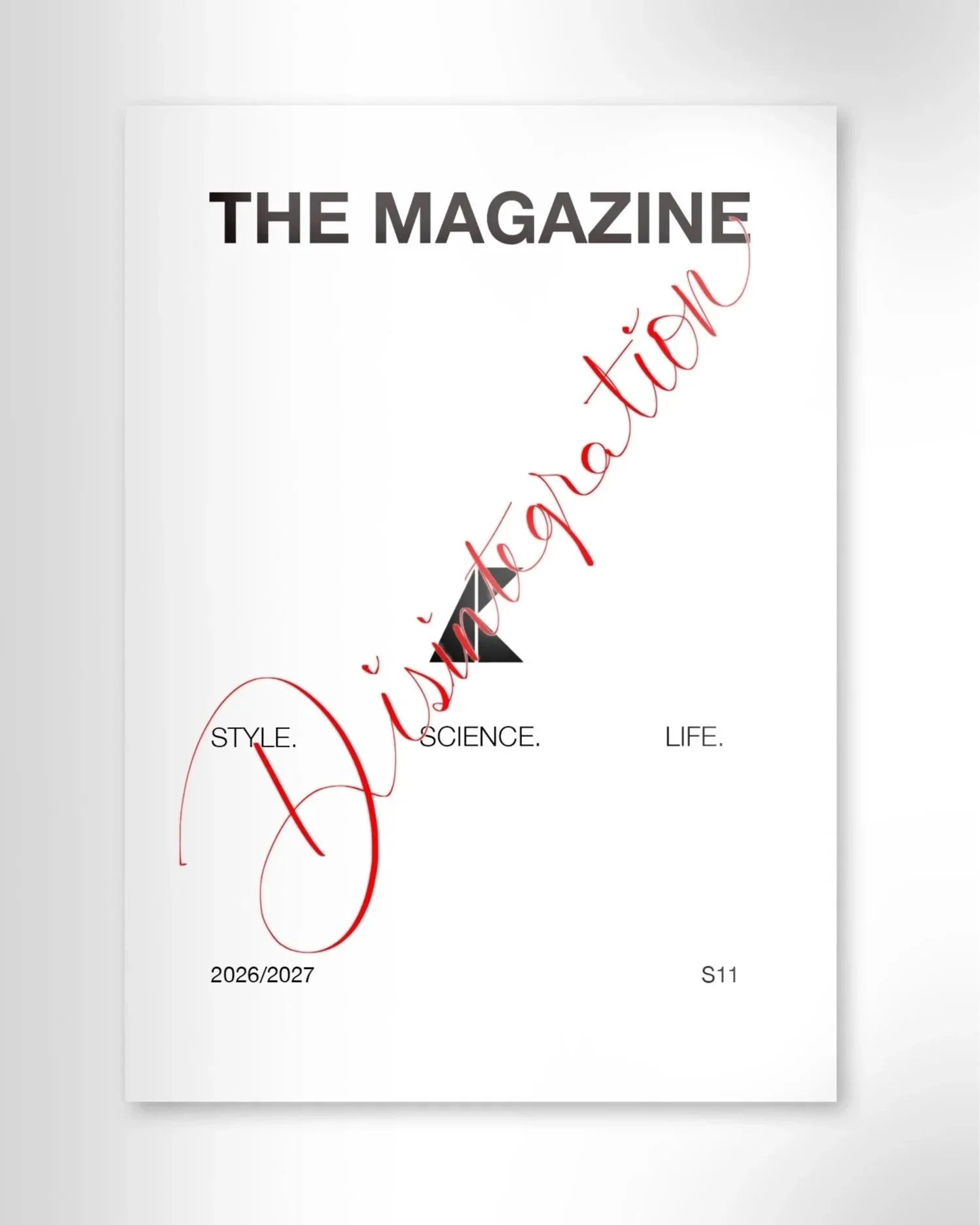
DISINTEGRATION
THE FALL-WINTER ISSUE